If School Grades Were Enough, No Child Would Fail O and A Level

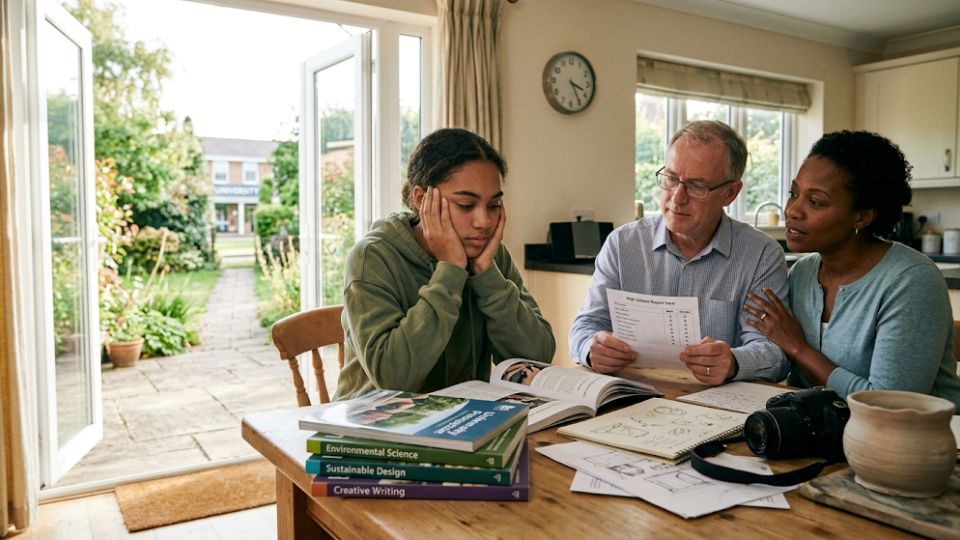
Your child's school grades tell you something about their ability. But not much. A grade mixes many things together. How hard the child worked. How good the teacher was. How much the extra lessons helped. Natural ability is in there somewhere, but the grade cannot show you how much. That is why children with good school reports still fail O and A Level. And it is why choosing subjects based on grades alone so often ends badly.
We see this every day. Parents walk into our offices worried about their children because they have seen where wrong subject choices end. A nephew who repeated A Level twice. A friend's daughter who dropped out of engineering. Some went through it themselves. Almost all of them believe this pain is just part of life. It is not. It can be avoided.
Why do children with reasonable grades still fail O and A Level?
Picture two children who score the same mark in Form 2 maths. One is naturally good with numbers and barely struggles. The other struggles with numbers but had extra lessons and worked very hard. Same mark. Same report. Completely different futures in maths.
Hard work can carry a child through junior secondary because the work is still easy. Then O Level comes. Then A Level. Now the subject demands real ability, not just effort. The child who was surviving on hard work starts to fail. Everyone is shocked. The grades always looked fine.
Think about this for a moment. If grades were a good guide to what a child should study, no child would fail O and A Level. Every child who sits those exams chooses their subjects based on grades. Look at the failure rates. That tells you everything.
What is natural aptitude, and how is it different from school performance?
Natural aptitude is the ability a child was born with. It is there before any teaching happens. You cannot cram it, and you cannot fake it. It is the raw material that hard work builds on.
Our tests do not ask what your child learned in class. They measure ability that has nothing to do with the syllabus. We test five areas, using validated instruments, and we compare your child with other children at the same stage in this country:
1. Verbal reasoning: how well a child understands written words and draws conclusions from them. This matters for languages, humanities, and law.
2. Numerical reasoning: how well a child works with numbers. This matters for maths, accounting, economics, and the sciences.
3. Abstract reasoning: how quickly a child spots patterns in material they have never seen before. This is the best single sign of how easily a child learns new things.
4. Spatial reasoning: how well a child can picture and turn objects in their mind. This matters for engineering, architecture, design, and technical drawing.
5. Mechanical reasoning: how well a child understands how physical things work. This matters for technical subjects and engineering trades.
These five abilities point straight at school subjects. A child who is strong in spatial and mechanical reasoning but weak in verbal reasoning needs different subjects from a child who is the opposite. Their school reports might look the same. Their abilities are not. The school report cannot show you the difference. Our tests can.
Can an aptitude test really show which subjects my child will pass?
The test shows you which subjects your child has the ability to pass and which ones will be a constant fight. It does not promise anything. What it removes is the guessing. With the results in front of you, you choose subjects on evidence. Without them, you are guessing. Even careful guessing is still guessing.
What does the wrong subject choice actually cost?
Money first. School fees, extra lessons, exam fees, sometimes a repeated year. All of it spent pushing a child through subjects that were never right for them. Put that same money behind the right subjects, and you get distinctions.
The years hurt more. Subject choices at Form 3 close doors without warning. A child drops the wrong subject at fourteen. At eighteen they discover the degree they want is now out of reach. The wrong A Level combination cuts down university options before the child even understands what university is.
The third cost stays with you. Watching your child fail at something you chose for them. The money is gone. The years cannot come back. The child blames themselves. You blame yourself. Neither of you deserves the blame. Nobody ever assessed what the child was built for. That is the real failure. And that is the pain we work to prevent.
When should a child be assessed?
Do it early. We have done this work for 20 years with more than 10,000 people, and what worries us most is how late parents seek the right kind of guidance for their children. Most arrive after the child is already struggling. Testing works best before the trouble starts, not after. There are three windows:
1. Form 1 or Form 2 is the best time. Nothing is locked yet, and there is time to fix weak areas before Form 3 subject choices arrive.
2. Form 3 still works if you missed the first window. Subjects are being settled, and an A-Level direction is forming. There is still time to change course.
3. The move into A Level is the last critical window. A-level subjects are few and hard, and they decide university entry. This is the last chance to match the choice to real ability. If your child is here now, do not wait.
What if my child is already at university, and something feels wrong?
The same thing happens at university, only the stakes are higher. We meet students doing degrees they have no ability for, no interest in, or both. It always ends the same way. The student loses interests and motivation. The struggle grows. The parents watch fees disappear into a degree the child dreads, not knowing whether to push harder or pull out.
Testing at this stage gives you a straight answer. Either the degree is right, and we show what support will get the student through. Or it is wrong, and we show where their ability and interest actually point. Either way, the not knowing ends. Many students see career options that excite them for the first time in their lives.
What about adults already working, who no longer enjoy what they do?
Some of the unhappiest people we test look successful from the outside. Good salary. A career that makes sense on paper. And they feel nothing for the work. Ask them how they got there, and you hear the same stories. They took what was available at the time because they needed to survive. They followed the money. They followed friends. Or a parent pushed them into a respectable profession, believing it was the best thing they could do for their child. The push worked. Nobody ever asked if the career fit.
If this is you, the same tests that guide a Form 2 pupil can redirect your working life. We measure your natural aptitude, what actually interests you, and what your personality can carry for years. Then we map careers where the work itself gives you energy instead of taking it. Changing careers is hard. Twenty more years in a job you only endure is harder.
How does the assessment actually work?
Every assessment stands on three pillars. One leg alone falls over. Ability without interest gives you a job you are good at but hate. Interest without ability gives you passion and constant frustration. The right path is where all three line up.
1. We measure natural aptitude in the five reasoning areas using eight tests. Your child is compared with children at the same stage. A Form 2 pupil is compared with Form 2 pupils, not with graduates.
2. We measure career interests using the Career Quest interest profile, built on Dr. John Holland's six-type model, the most widely used interest model in career science. This shows what kind of work will keep your child motivated.
3. We measure personality because how a person works decides which environments will suit them.
4. A registered Occupational Psychologist leads every assessment, checks every result, and sits down with you and your child to explain what it all means. We never hand you a score sheet and leave you to work it out.
5. We map the whole road ahead, starting with the very next decision. The subjects your child can pass. The A Level combination of those subjects leads to. The degrees and careers that follow.
Is university the only destination the assessment recommends?
No. When the results show that university would mean years of struggle, we say so. Then we show you the vocational and technical paths where the same child will do well and be proud of their work. A skilled artisan who loves the job has a better career than a graduate who hates theirs. In every case, we show you the path your child can succeed in and enjoy.
Key takeaways
• A school grade mixes natural ability with hard work and good teaching. It cannot tell you how much of each is in there. Our tests measure the ability on its own.
• A child can pass junior secondary on hard work alone, then fail O or A Level when the subject starts demanding real ability. That is why good grades still end in failure.
• The wrong subject choice costs money, years, and pain for both parent and child. All of it can be avoided.
• The best time to test a child is Form 1 or Form 2. Form 3 still works. The move into A Level is the last chance before choices become permanent.
• We measure three things: natural aptitude in five reasoning areas, career interests, and personality. A lasting career needs all three pointing the same way.
• The results map the whole road: subjects, A Level, university or vocational training, and actual careers. A registered Occupational Psychologist explains everything to you in person.
• University students doubting their degree, and working adults tired of their jobs, can use the same tests to confirm their path or find a better one.
The decision in front of you
Sometime soon, your child will make a choice at fourteen that will continue to shape their life at forty. You can let that choice happen the usual way. Grades. Prestige. What their friends are taking. Or you can assess first.
Book an assessment at ipccareerguidance.com. Pick the package that matches your child's stage. Within days, you will sit with a registered Occupational Psychologist and see, clearly, what your child is naturally gifted in and where they can go. The parents who did this early all say the same thing. They are glad they did not wait.